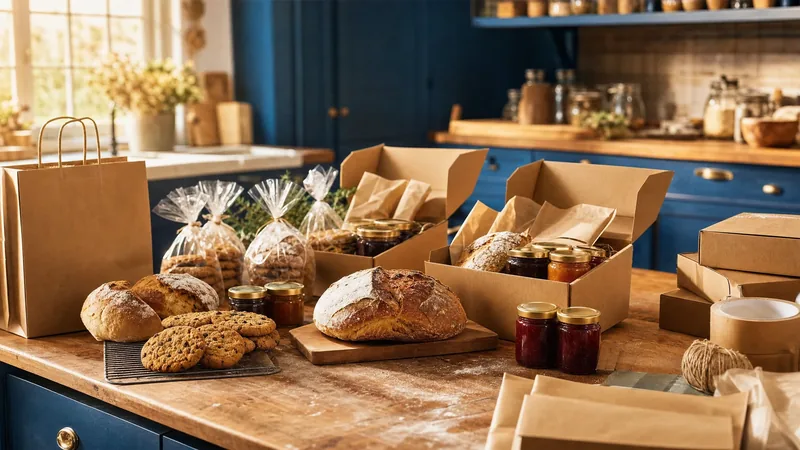
How to Start a Home Food Business in Arkansas: Food Freedom Act, No Permit, Required Label Statement and What Is Not Allowed
How to Start a Home Food Business in Arkansas: Food Freedom Act, No Permit, Required Label Statement and What Is Not Allowed
If you bake, cook, or put up food in your own kitchen, Arkansas may let you sell some of it without a Health Department permit or inspection. The rules come from the Food Freedom Act (Act 1040 of 2021), which replaced the older Cottage Food Act (Act 399 of 2017). This guide explains how to start a home food business in Arkansas under those rules, which label you must print, which foods stay off limits, and what other registrations you may still need.
This article is informational content only. It is not legal or tax advice. Rules and agency guidance change, so confirm current requirements with the agency named in each section. If your plans are complex, such as wholesale accounts, interstate shipping, or hiring employees through an LLC, consult a qualified Arkansas attorney or certified public accountant (CPA) before you commit.
What the Food Freedom Act Allows
The Food Freedom Act exempts homemade food from Health Department permitting and inspection when all three of the following are true:
- The food is non-TCS. Non-TCS means the food does not need refrigeration to stay safe. Common examples include most breads, cookies, and cakes without cream or custard fillings, candy, granola, dry mixes, and shelf-stable jams and jellies.
- You made it in your private residence. The exemption covers food produced at home, not in a separate commercial kitchen.
- You sell it to an informed end consumer. The sale can be in person, by phone, or online. You may also sell through an agent or a third-party retailer, and the product may be delivered or shipped.
Out-of-state sales must still meet federal law. The Arkansas exemption does not override federal requirements that apply to interstate commerce, so check those before you ship a product across state lines.
The Health Department's Homemade Food Production Guide, dated May 21, 2026, does not list a dollar cap on sales. Read the current version of the guide before you rely on that point, because the guidance can be updated.
Materials and Ingredients You Will Need
Gather the following before you make your first batch for sale. Costs vary widely by product and volume, so build a budget line for each item.
- A clean, dedicated work area in your residence with a sink, hot running water, and surfaces you can fully sanitize
- A kitchen scale and measuring tools so that every batch matches your written recipe
- Written recipes listing every ingredient with its exact amount, because you will need that list for your label
- Food-safe containers, bags, and closures that protect the product from contamination
- A printer or label service that can produce the full required label legibly on every package
- A batch log, kept as a spreadsheet or notebook, recording the date made, batch number, ingredients, and sales
- A calibrated pH meter if you plan to sell pickles or other acidified vegetables
- A sole proprietor assumed name filing with your county clerk, or an LLC filing with the Secretary of State if you choose that structure
- An Arkansas Taxpayer Access Point (ATAP) account and a sales and use tax permit if your sales are taxable
Step-by-Step: How to Start a Home Food Business in Arkansas
Step 1: Confirm Your Product Is Non-TCS
Start with the product, not the business. Ask whether the food needs refrigeration to stay safe. If it does, it is a time and temperature control for safety (TCS) food, and it cannot be sold under the Food Freedom Act without a permit. Cream or custard pies, cheesecake, cut melons, cut tomatoes, cut leafy greens, garlic in oil, and sprouts are the most common examples people overlook. Take those items off your product list for now, even if they are your best sellers in your own kitchen.
Step 2: Confirm Your Sales Channel Fits the Law
You may sell directly to consumers at a farmers market, from your home, by phone, or online. You may also place your product with a third-party retailer or work through an agent. You may not sell to restaurants under this exemption. If a cafe asks you to supply cookies for its menu, that sale falls outside the exemption, so do not make it under this framework until you have confirmed the options with the Health Department.
Step 3: Write and Test Your Recipe
Write every recipe with exact weights or measurements, and use the same version for every batch. Your ingredient list must appear in descending order on the label, so a precise recipe makes your label accurate. If you sell acidified products, use an approved or tested recipe. Changing an ingredient can change both the label and, for acidified foods, the safety of the finished product, so treat any change as a new recipe that needs its own review.
Step 4: Register Your Business Name
If you operate as a sole proprietor under a name other than your own, record the assumed name with your county clerk in the county where you do business. Sole proprietors do not file with the Arkansas Secretary of State. Each county sets its own clerk recording fee, and the Secretary of State does not publish those amounts, so call your county clerk to confirm the cost before you file.
If you form a limited liability company (LLC), you file the Certificate of Organization (Form LL-01) with the Arkansas Secretary of State, Business and Commercial Services Division. The filing fee is $45. An LLC must also appoint a registered agent with a street address in Arkansas, because a P.O. Box is not an acceptable address. Each year the LLC files the Annual LLC Franchise Tax Report, which carries a flat $150 tax and is due May 1. If the LLC will sell under a trade name, that fictitious name filing costs $22.50 online or $25.00 on paper. Forming an entity is optional for a small home operation, and an attorney or CPA can help you decide whether it makes sense for you.
Step 5: Get a Sales and Use Tax Permit If Your Sales Are Taxable
Any business selling tangible personal property or taxable services must obtain a sales and use tax permit from the Arkansas Department of Finance and Administration. The permit costs $50 and is applied for through the Arkansas Taxpayer Access Point. The state sales tax rate is 6.5%. Whether your particular food products are taxable is a question to confirm with the Department of Finance and Administration before your first sale, because treatment can depend on the product and how it is sold. Do not assume your food is exempt just because it is homemade.
Step 6: Check City Requirements
Arkansas has no general statewide business license, and counties issue no general business license. Cities are different. Many of Arkansas's 500 municipalities impose their own business license, privilege license, or registry, and the bases differ. Little Rock and North Little Rock charge based on a base amount plus the number of employees. Bentonville keeps a free registry. Conway imposes none. Because your city may have its own rule, contact your city clerk or finance office and ask what applies to a home food operation before you begin selling.
Step 7: Check Unemployment Insurance and Withholding If You Hire Help
If you pay anyone to help, including part-time workers, you may need to register with the Division of Reemployment for unemployment insurance and set up withholding through ATAP. Confirm your obligations with each agency before you hire, because the requirements depend on your payroll setup and business structure.
Step 8: Build Your Label and Records
Print the full required label statement on every package. Prepare a separate disclosure document for bulk sales, and display the same disclosures on your website for online sales. The exact elements are listed in the next section. Keep batch records so that you can trace any product back to its ingredients and production date if a customer asks questions or a problem arises.
Step 9: Start Small and Review
Make a small first batch, sell it, and log every sale. Review your label, your sales channel, and your tax position every few months, and again whenever you change a recipe, add a product, or add a sales outlet.
The Required Label Statement and Disclosures
Every product sold under the Food Freedom Act must carry the following disclosures. Put them on the package label. For bulk sales, provide them on a separate document. For online sales, post them on your website. The required elements are:
- The date the product was made
- Your name as the producer
- Your address and phone number, or an identification number issued by the Arkansas Department of Agriculture
- The common name of the product
- The ingredients, listed in descending order
- The required statement, reproduced word for word:
This product was produced in a private residence that is exempt from state licensing and inspection. This product may contain allergens.
Do not paraphrase the statement or shorten it. A label that leaves out a required element can take a compliant product outside the exemption, so proofread every new label before printing a run.
Pickles and Acidified Vegetables
Pickles and acidified vegetables need a final pH of 4.6 or less. You can meet that requirement in one of two ways: use an approved or tested recipe, or test each batch with a calibrated pH meter. Either way, assign a batch number to each batch, put that number on the label, and keep records showing the recipe, the test results, and the date made. Records are the part most home producers skip, and they are the part that matters most if a question comes up later.
What Is Not Allowed Without a Permit
The following products fall outside the exemption and cannot be sold without a Health Department permit:
- Meat, poultry, seafood, and wild game
- Dairy products
- Other TCS foods, including cream or custard pies, cheesecake, cut melons, cut tomatoes, cut leafy greens, garlic in oil, and sprouts
- Canned low-acid foods
Sales to restaurants are not allowed under the exemption, no matter what the product is. If your product list includes any item above, remove it from the home-sale line or confirm the permit path with the Health Department before you sell it.
Expected Results
Results depend on your product, your pricing, your local market, and how consistently you produce and sell. The Food Freedom Act may remove the permit and inspection requirement for qualifying products, but it does not guarantee sales or profit. Many home producers start with one or two products sold at a local market or through a single retail partner, and some expand from there over time. Others find that labeling, record keeping, and tax filings take more time than the sales bring in. Plan for a slow start, and track your actual costs and revenue from the first batch.
Avoid health claims in your marketing. Describing a product as preventing, treating, or curing a condition may bring it under different rules and could draw regulatory attention. Describe the product by its ingredients, flavor, and preparation instead.
Common Mistakes to Avoid
- Selling a TCS item such as a cream pie, cheesecake, or cut melon under the exemption
- Selling to a restaurant, or treating a cafe order as an ordinary retail sale
- Leaving out a required element of the label, such as the producer phone number or the ingredient list in descending order
- Omitting the required statement or changing its wording
- Making pickles or acidified vegetables without an approved recipe or a pH test on each batch
- Skipping batch numbers and sales records
- Shipping out of state without first confirming that federal requirements are met
- Assuming no tax or city license applies because the state has no general business license
- Using health claims in advertising, packaging, or social media posts
Practical Tips
- Keep one master label template, and update it whenever a recipe changes
- Save a copy of the Health Department's Homemade Food Production Guide with its date, so you can show which version you followed
- Keep receipts and sales records organized from the first sale, because you will need them for sales tax and income tax filings
- Ask your insurance agent whether your policy covers home food sales, and what a product liability policy would cost
- Contact the Arkansas Small Business and Technology Development Center for guidance on planning, pricing, and business structure
Permit and Registration Checklist
| Requirement | Agency | Cost or timing |
|---|---|---|
| Food Freedom Act exemption (non-TCS, made at home, sold directly) | Arkansas Department of Health guidance | No permit or inspection |
| Assumed name for a sole proprietor | County clerk | Set by each county, so confirm with your clerk |
| Trade name for an LLC or corporation | Arkansas Secretary of State | $22.50 online or $25.00 on paper |
| Sales and use tax permit | Arkansas Department of Finance and Administration through ATAP | $50 |
| Unemployment insurance and withholding (if you hire) | Division of Reemployment and ATAP | Confirm with each agency |
| City business license or registry | Your city | Varies by city, so confirm locally |
| LLC Certificate of Organization (Form LL-01) | Arkansas Secretary of State | $45 filing fee |
| Annual LLC Franchise Tax Report | Arkansas Secretary of State | $150, due May 1 |
Where to Confirm Current Rules
- Arkansas Secretary of State, Business and Commercial Services Division: https://www.sos.arkansas.gov/business-commercial-services-bcs/
- Corporations Online Filing System: https://www.ark.org/sos/corpfilings/index.php
- Arkansas Department of Finance and Administration: https://www.dfa.arkansas.gov/
- Sales and use tax account registration: https://www.dfa.arkansas.gov/office/taxes/excise-tax-administration/sales-use-tax/register-for-a-tax-account/
- Arkansas Small Business and Technology Development Center: https://asbtdc.org/
The Homemade Food Production Guide is published by the Arkansas Department of Health. Search the Department of Health website for the May 21, 2026 version, and confirm the current guidance before you start.
Next Steps
Start by confirming that your product is non-TCS and that your sales channel is one the exemption covers. Next, register your name, obtain a sales and use tax permit if your sales are taxable, and check your city's requirements. Then build your label with every required element, and keep batch and sales records from the first sale. If you follow those steps, you can test the market with a small, compliant operation before you invest in anything larger.
This article is informational content only and is not legal or tax advice. Confirm all fees, deadlines, and requirements with the agency named in each section, and consult a qualified Arkansas attorney or CPA for decisions about your business structure, taxes, insurance, or expansion.
Keep exploring: related Arkansas guides
- How to Start a Food Truck in North Little Rock, Arkansas
- How to Start a Restaurant in Arkansas
- How to Start a Food Truck Business in Arkansas
- How to Open a Bar or Private Club in Arkansas
- Arkansas Dry Counties, Private Club Permits and Alcohol Licenses
- How to Start an LLC in Arkansas
- Arkansas Business License
- How Much Does It Cost to Start a Business in Arkansas
- All Arkansas business types
- Every Arkansas guide in one place