Arkansas Food Freedom Act and Cottage Food Rules: Sell Homemade Food Without a Permit, Label Statement Required, No Sales Cap in the Act
Arkansas Food Freedom Act and Cottage Food Rules: Sell Homemade Food Without a Permit, Label Statement Required, No Sales Cap in the Act
If you bake bread, make jams, or mix dry spice blends in your home kitchen, Arkansas law may let you sell them without a state food permit. The Food Freedom Act, Act 1040 of 2021, is the core of the state's cottage food rules, and it is simpler than most people expect. It is also narrower than many online guides suggest. The Act covers only certain foods, requires a specific label statement, and does not override city rules or tax obligations. This guide covers each piece so you can sell legally from your first order.
Informational only. This article explains Arkansas law in general terms. It is not legal or tax advice. Talk with a qualified attorney or CPA before you start, especially if you plan to sell at scale, hire help, or form an entity.
What the Food Freedom Act Covers
The Food Freedom Act is codified at Arkansas Code Annotated 20-57-501 to 507. It exempts food made in the producer's private residence from state licensing, inspection, certification, and packaging and labeling rules. In practical terms, you do not need a Department of Health food establishment license to sell qualifying homemade food from your home.
The exemption applies only to non-TCS food. TCS stands for time and temperature control for safety, meaning food that must be refrigerated or heated to stay safe. Meat, poultry, seafood, and dairy are all outside the Act. The Arkansas Department of Health publishes guidance on the Act, and you should check the current version of that guide before you sell anything.
The Act also limits who you can sell to. Sales must go directly to an informed end consumer. You may sell in person, online, or by shipping. Selling to a restaurant that serves your food, or to a store that resells it, falls outside the Act.
What You Can and Cannot Sell
| Product or sale | Status under the Act |
|---|---|
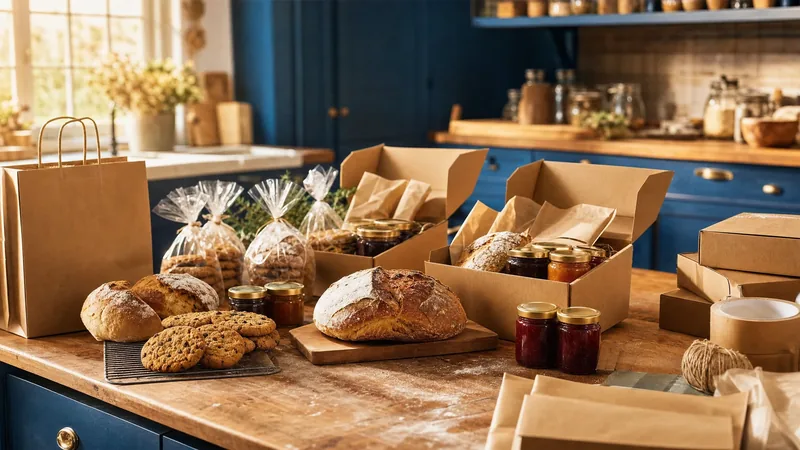
| Shelf-stable non-TCS foods made in your home, such as many breads, cookies, jams, jellies, candies, granola, and dry mixes | Covered, if each product is confirmed as non-TCS |
| Meat, poultry, or seafood | Not covered |
| Dairy foods | Not covered |
| Any TCS food that must stay cold or hot to be safe | Not covered |
| Sales to restaurants or to stores that resell the food | Not covered |
| Direct sales in person, online, or by shipping to the consumer | Covered |
Whether a specific recipe is non-TCS is your call to make carefully. Many items that look shelf-stable, such as cream-filled cakes, can still require refrigeration. When a product is borderline, ask the Arkansas Department of Health or an attorney before you sell it under the Act.
Required Label Disclosures
Labeling is the one area where the Act still expects you to do real work. Under the Act, the buyer must be given these items, on the label for packaged food, on a placard at the point of sale, or on the website for online sales:
- The date the product was made.
- Your name, address, and phone number as the producer.
- The common name of the food.
- The ingredients, listed in descending order.
- The following statement, word for word:
This product was produced in a private residence that is exempt from state licensing and inspection. This product may contain allergens.
Print the statement on every label, including labels on gift packaging and on products sold at markets. A missing label element is the most common compliance problem for home producers, and it is the easiest one to fix before you sell.
No Sales Cap in the Act
The Act has no annual dollar cap. Older cottage food guides cite limits of $20,000 or $50,000 in annual sales. Those figures are stale and do not apply under the current Act, so do not plan your business around them. Your real limits are your production capacity, your city's rules, and your tax obligations, which apply at any revenue level.
City and County Rules
Cities and counties may not prohibit or regulate production and sale under the Act. That protection is useful, but it does not mean your city has no paperwork for your home business. Arkansas has no general state business license and no county business license. Many cities, however, impose their own business license, privilege license, or registry, and each uses a different basis.
- Little Rock and North Little Rock base their city business license on a base amount plus an employee-based amount. North Little Rock's city page says home-based businesses need a city license, so confirm with the city clerk whether that applies to you.
- Bentonville maintains a free business registry. Confirm whether your home food business must register.
- Conway does not impose a city business license.
Arkansas has 75 counties and 500 municipalities, and the rules differ across them. Call or visit your city clerk's office before your first sale and ask two questions: whether the city requires a license or registry for a home food business, and what it costs.
Taxes Still Apply
The Act exempts you from food licensing and inspection. It does not exempt you from taxes.
- Sales and use tax. Arkansas's state sales tax rate is 6.5 percent. A business selling tangible personal property or taxable services must obtain a sales and use tax permit from the Department of Finance and Administration. The permit costs $50 and is applied for through the Arkansas Taxpayer Access Point (ATAP). Confirm with DFA whether your specific sales are taxable.
- Personal income tax. If you run the business as a sole proprietor, your profit is reported on your personal return. Arkansas's top personal income tax rate is 3.7 percent for tax years beginning on or after January 1, 2026. Local jurisdictions do not levy an income tax.
- Employees. If you hire anyone, you will need to register for withholding through ATAP and for unemployment insurance with the Division of Reemployment.
Step-by-Step Checklist
- Confirm each product is non-TCS. Drop any item that needs refrigeration or heating for safety.
- Build compliant labels. Include the date, producer details, common name, descending ingredient list, and the required statement.
- Check your city. Ask the city clerk whether a license or registry applies to your home business.
- Register for sales tax. Apply for the $50 sales and use tax permit through ATAP if your sales are taxable.
- File a business name if needed. A sole proprietor who sells under a name other than their own legal name records that assumed name with the county clerk. The county sets that fee, so confirm the amount with the clerk. An entity files its trade name with the Secretary of State for $22.50 online or $25.00 on paper.
- Keep records. Track sales, ingredient costs, and tax payments from the first transaction.
- Consider an entity. An LLC is formed by filing a Certificate of Organization (Form LL-01) for a $45 online filing fee ($50 on paper). Every LLC pays a flat $150 annual franchise tax, reported on the Annual LLC Franchise Tax Report, due May 1. Whether an LLC makes sense for a small food business is a question for your attorney or CPA.
Common Mistakes to Avoid
- Selling meat, dairy, or other TCS items under the Act.
- Selling to a restaurant or a store that resells your product.
- Leaving off the required statement or any required label element.
- Planning around the old $20,000 or $50,000 cottage food caps.
- Assuming a home business needs no city paperwork.
- Skipping sales tax registration because the Act removed food licensing.
Where to Confirm Current Requirements
Rules and fees change, so verify the details below before you file or sell.
- Arkansas Secretary of State, Business and Commercial Services Division for business names, entity filings, and the franchise tax report.
- Arkansas Secretary of State business search to check whether a name is already in use.
- Arkansas Department of Finance and Administration for tax questions.
- DFA sales and use tax account registration to apply for your permit.
- The Arkansas Department of Health for the current guide to the Food Freedom Act. Search the agency website for the most recent version.
- Arkansas Small Business and Technology Development Center for free or low-cost planning help.
- SBA Arkansas district office for small business resources in your region.
The Bottom Line
Arkansas's cottage food law lets you sell qualifying homemade food without a state food permit, and the Act sets no annual sales cap. The trade-off is that you must keep the product non-TCS, sell directly to consumers, print the required label, and handle the city, tax, and business name steps that the Act does not remove. Get those pieces right at the start and a home food business can run for years without surprises.