How to Start an Agritourism Business in Arkansas: The Mandatory Warning Sign and Contract Clause That Keep Liability Protection
How to Start an Agritourism Business in Arkansas: The Mandatory Warning Sign and Contract Clause That Keep Liability Protection
If you are researching how to start an agritourism business in Arkansas, the paperwork that matters most may not be the entity filing. It is the liability warning. Under the Arkansas Agritourism Act, A.C.A. 2-11-101 to 2-11-107, an operator is not liable for injury or death caused by an inherent risk of agritourism only if the statutory warning is posted, and the Act separately requires the same warning in written participant contracts. Skip that step and the protection you were counting on may not apply.
This guide walks through the formation sequence, from confirming your activities qualify to posting the sign and writing the contract clause. It covers the Arkansas fees, filings and deadlines that we could verify. This is informational content, not legal or tax advice. Read the disclaimer at the end before you rely on any of it.
What the Arkansas Agritourism Act Covers
The Act protects operators of farms, ranches and agribusinesses that offer activities tied to agriculture, food production, historic farming traditions or nature-watching. Covered activities include harvest-your-own operations, farm tours and animal exhibitions at fairs. Activities can be interactive, such as picking your own strawberries, or passive, such as watching a working dairy from a viewing area.
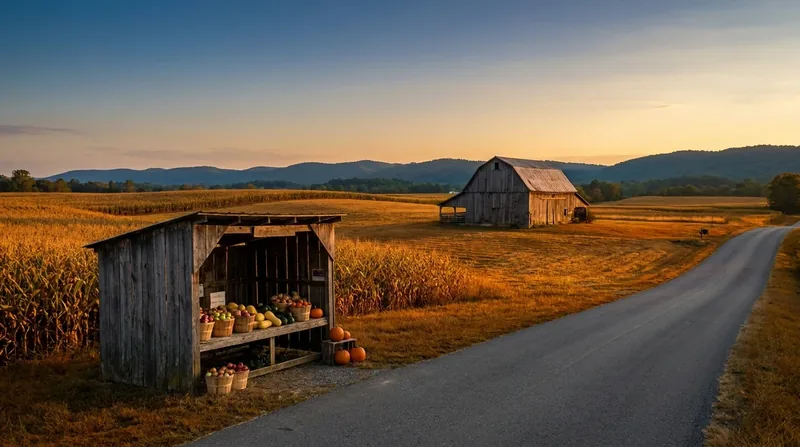
Two exclusions matter for planning. First, the Act does not cover roadside fruit and vegetable stands (2-11-103). Second, it does not cover operations devoted only to retail sales of merchandise or food. If your income comes mainly from a counter or a shelf of products, the protection may not fit your business. Mixed operations should have each activity reviewed before the season opens.
Participants assume the inherent risks of agritourism under 2-11-104. Read the definitions in the Act itself, because the exact statutory wording controls how the protection applies to your operation.
Materials and Information You Need Before You Start
- A written list of every activity you plan to offer, labeled as interactive, passive or retail
- A street address in Arkansas for your registered agent or office (a P.O. Box is not acceptable)
- Your proposed business name, checked against the Secretary of State business search at https://www.sos.arkansas.gov/corps/search_all.php
- Access to the Corporations Online Filing System, or the paper forms
- Budget for the $45 online filing fee ($50 on paper) for an LLC Certificate of Organization (Form LL-01), the optional $22.50 name reservation, and the $50 sales and use tax permit if it applies to you
- A printed entrance sign with black letters at least 1 inch high
- Hazard signs for specific known dangers, such as a pond, a hayloft or a bull pen
- A participant waiver or contract template reviewed by an attorney, with the warning clause included word for word
- Insurance quotes for general liability coverage, which the Act does not replace
- A calendar entry for the May 1 annual report deadline
Step-by-Step: Starting Your Agritourism Business
Step 1: Map Your Activities Against the Act
Write down each activity and the revenue it creates. Typical examples include farm tour admissions, pumpkin patch entry fees, petting zoos and pick-your-own fields. Mark anything that is only a roadside stand or a retail counter as outside the Act. Watch the balance between activity revenue and product sales. If most of your income comes from selling goods rather than offering experiences, speak with an attorney before you rely on 2-11-101 to 2-11-107.
Step 2: Choose Your Legal Structure and File It
Most agritourism operators choose between a sole proprietorship and a limited liability company. A sole proprietorship requires no state formation filing, but your personal assets stay exposed to business claims. An LLC is a separate legal entity. In Arkansas you form one by filing the Certificate of Organization (Form LL-01) with the Secretary of State. The filing fee is $45 online or $50 on paper. You can file through the Corporations Online Filing System at https://www.ark.org/sos/corpfilings/index.php. The Secretary of State lists anticipated processing of 3 to 5 business days for all filings, whether mailed, dropped off or submitted online. Its Business Services FAQ says in-person drop-offs carry a 48 hour turnaround.
The LLC name must include Limited Liability Company, Limited Company, or an approved abbreviation such as LLC or L.L.C. You can reserve a name for 120 days for $22.50. Issuing a name does not by itself give you an exclusive right to use it.
Your LLC must appoint a registered agent who has a street address in Arkansas and is actually located there. A P.O. Box is not acceptable, and an incomplete filing will be returned for correction. The agent can be you or a commercial registered agent. You can change the agent later with a filing that carries no fee.
After formation, an LLC owes the Annual LLC Franchise Tax Report of $150, due on or before May 1 each year. A late filing adds a $25 penalty plus interest.
Step 3: Register a Trade Name If You Operate Under One
If your public name differs from your legal name or LLC name, you need a fictitious name filing. LLCs file the Application for Fictitious Name with the Secretary of State. The fee is $22.50 online or $25.00 on paper. Sole proprietors do not file with the Secretary of State. They record the assumed name with their county clerk. Each county sets its own recording fee, so call your county clerk for that figure. Corporations face an extra step, because a domestic corporation must also file with the county clerk of its registered office county unless that office is in Pulaski County.
Step 4: Register for State Taxes and Payroll
Arkansas has no general statewide business license. Registration is by activity. If you sell tangible personal property or taxable services, you need a sales and use tax permit from the Department of Finance and Administration (DFA). The permit costs $50 and is applied for through the Arkansas Taxpayer Access Point, linked from https://www.dfa.arkansas.gov/office/taxes/excise-tax-administration/sales-use-tax/register-for-a-tax-account/. The state sales tax rate is 6.5%. Whether admissions to your farm are taxable depends on what you sell, so confirm the treatment with DFA before you open.
If you hire employees, withholding is also registered through the ATAP portal. Unemployment insurance is handled by the Division of Reemployment. Confirm each registration step with the agency before your first payroll.
Step 5: Check City and Local Requirements
Arkansas has 75 counties and 500 municipalities. Counties issue no general business license, but many cities do, and each city sets its own basis. Little Rock and North Little Rock charge based on a base amount plus employees. Bentonville runs a free registry. Conway imposes no business license. If you are inside city limits, check with the city clerk. Zoning, parking and event rules for farm tours are set locally, and this guide does not cover them, so ask the city or county planning office how they apply to your land.
Step 6: Confirm Activity-Specific Licenses
Arkansas licenses most regulated activities through an agency or board. Check each one that applies to you:
- Department of Health: food establishments. Whole, uncut fresh produce sells without a Health Department permit, but prepared food, such as a farm kitchen or a cider tasting, needs review. Confirm before serving food. The department also licenses certain trades, such as cosmetology and massage, if you offer those services.
- Alcoholic Beverage Control Division: any wine or beer tasting or sale.
- Game and Fish Commission: wildlife, hunting, fishing or certain animal exhibits. Confirm before you host these.
- Department of Labor and Licensing: the Contractors Licensing Board, Electrical Examiners and HVAC/R Board, if you have contractors build or install event structures or utilities.
Do not assume a license is unnecessary because the activity happens outdoors. Ask the agency that governs the activity.
Step 7: Post the Warning Sign at the Main Entrance
The Act requires a sign in a clearly visible place at or near the main entrance (2-11-107(a)). The letters must be black and at least 1 inch high. The sign must begin with this wording:
WARNING - Under Arkansas law, an agritourism activity operator is not liable for the injury or death of a participant...
Copy the complete text from 2-11-107(a) exactly as written. Do not paraphrase, shorten or add to it. Mount the sign where guests see it before they pay, park or enter a field, not only in a back office. Replace faded or damaged signs right away, because a sign you cannot read may not meet the requirement.
Step 8: Post Hazard Signs for Known Dangers
Separate from the entrance sign, the Act requires signs for specific known hazards (2-11-107(c)). Common examples include a pond, an open grain bin, a hayloft, a bull pen or an electric fence. Place each hazard sign at the point where a participant could encounter it. Keep a written list of known hazards and review it every season, since an undisclosed known danger removes the protection.
Step 9: Add the Warning to Every Written Participant Contract
The same warning must appear in clearly visible print in every written participant contract (2-11-107(b)). The statute says every written contract between the operator and a participant, so group booking forms, field trip agreements and waivers signed at the gate are the safest places for it. Ask your attorney whether online ticket terms count as a written contract. A verbal reminder does not satisfy the requirement. Have the clause placed near the signature line so it is easy to read, and keep signed copies on file. Confirm with your attorney that the contract's other terms work with the warning and with your entity type.
Step 10: Set Up Insurance and Recurring Compliance
Get general liability insurance quotes before opening, and ask how the policy treats agritourism activities. The Act limits liability under specific conditions, but it is not insurance and it does not cover every claim. Then calendar your recurring obligations, including the May 1 LLC franchise tax report if you formed an LLC, the sales tax filing schedule if you hold a permit, and renewals for any activity licenses.
Where the Protection Stops
The Act does not protect against gross negligence, an undisclosed known danger or animal propensity, intentional injury, or willful or wanton misconduct (2-11-105). An operator who skips the sign, leaves a known hazard unmarked or ignores a visibly dangerous condition may lose the protection, even with a signed contract. Treat the warning as the minimum, and manage the hazards themselves.
Tips for Getting It Right
- Walk the property the way a guest would. Note every spot where a sign should be posted before you print anything.
- Keep one master contract template and version it by date, so you can prove which warning language each guest signed.
- Train staff to explain the entrance sign and the hazard rules, because guests often ask about them.
- Use the Small Business and Technology Development Center for free or low-cost guidance on planning and filings. Its site is https://asbtdc.org/.
- Check the SBA Arkansas district page at https://www.sba.gov/district/arkansas for local counseling and lending resources.
Common Mistakes to Avoid
- Treating the warning as optional. The Act requires both the sign and the contract clause, and the liability limit applies only when the warning is posted.
- Paraphrasing the statute. Use the wording in 2-11-107(a) exactly.
- Using a P.O. Box as the registered agent address. The filing will be returned.
- Assuming a single state business license covers everything. Arkansas has none, so each registration and license must be checked separately.
- Mixing up the fee for an entity and a sole proprietor. Sole proprietors record assumed names with the county clerk, not the Secretary of State.
- Missing the May 1 annual report. A late LLC filing adds a $25 penalty plus interest.
- Running a roadside stand under the Act. Roadside fruit and vegetable stands are excluded.
Expected Results
Done correctly, these steps may help you open on schedule, reduce the chance of an avoidable filing rejection and position your operation for the liability protection the Act describes. Results depend on your activities, your facilities, your insurance and your conduct on the property. No outcome is guaranteed, and the Act does not shield an operator from every claim.
Any statements about farm products should be reviewed for accuracy against current Department of Health and Food and Drug Administration guidance before you publish them. Avoid claims that a product or experience treats, prevents or cures any condition.
Frequently Asked Questions
Do I need a state business license to run a farm tour?
Arkansas has no general state business license. You may still need a sales and use tax permit, a city license, or an activity-specific license or review, depending on what you offer.
Does the Act apply if I sell both experiences and products?
It may, but only for the activities that qualify. Retail-only operations are excluded, and mixed operations should be reviewed with an attorney before the season begins.
Important Disclaimer
This article is informational only and is not legal, tax or insurance advice. Laws, fees and agency rules change, and the figures above should be confirmed with the named agency before you act. Because agritourism involves premises liability, contracts, employment and licensing, consult a qualified Arkansas attorney and a CPA before you open, especially for complex or mixed operations.
Official Resources
- Arkansas Secretary of State, Business and Commercial Services Division: https://www.sos.arkansas.gov/business-commercial-services-bcs/
- Corporations Online Filing System: https://www.ark.org/sos/corpfilings/index.php
- Arkansas Department of Finance and Administration: https://www.dfa.arkansas.gov/
- Arkansas Small Business and Technology Development Center: https://asbtdc.org/