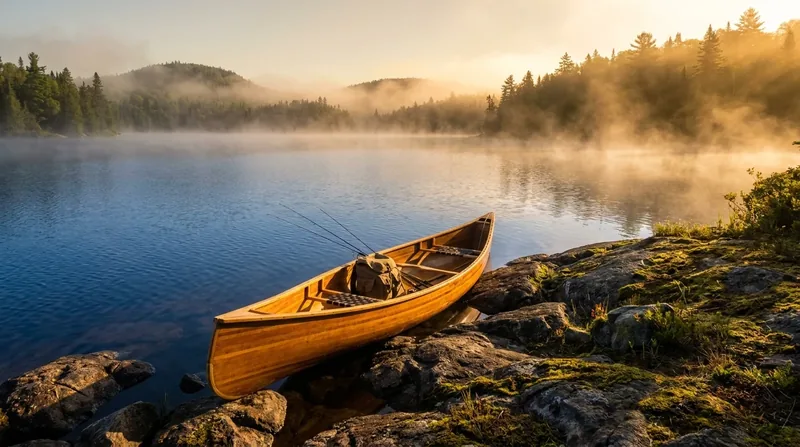
How to Start a Float and Canoe Outfitter Business on the Buffalo River: Why Rental Slots Are NPS Contracts and How Guided Trips Work
How to Start a Float and Canoe Outfitter Business on the Buffalo River: Why Rental Slots Are NPS Contracts and How Guided Trips Work
If you want to start a float outfitter business in Arkansas, the Buffalo River is where the rules differ most from the rest of the state. You cannot open a canoe rental shop on the river, buy a fleet of boats and start taking customers. The Buffalo National River is a National Park Service unit, and rental and shuttle service inside the park runs on concession contracts. Guided trips, where you stay with the clients for the whole trip, run on a separate federal authorization. Knowing which one you are applying for shapes the rest of your plan.
This guide covers the order of the steps, the materials to collect first, the state filings that apply to nearly every Arkansas business, and the mistakes that cost new operators the most time. It is informational content, not legal or tax advice. Before you sign a lease, an insurance policy or a contract, have an Arkansas attorney and a certified public accountant review your structure.
Materials and Information You Need Before You Start
Collect these items before you contact the park or any state agency. The park will ask for most of them in writing, and several take weeks to assemble.
- A business name checked against the Arkansas Secretary of State business search
- A street address in Arkansas for your registered agent. A P.O. Box is not acceptable.
- A federal Employer Identification Number from the IRS
- A written business plan that names each activity you will offer, the river sections you plan to use and your expected client volume
- A commercial insurance broker who has placed liability coverage for outdoor recreation operators
- An employee list with names, roles and certifications
- A written operating plan and safety plan, including guide qualifications and emergency procedures
- An inventory of boats, personal flotation devices, throw bags, first aid kits, and any shuttle vehicles and trailers
- A start-up budget covering filing fees, insurance, vehicles, equipment and several months of operating costs before revenue arrives
Step 1: Decide Which Float Business You Are Starting
Buffalo River businesses fall into three groups, and each has its own approval path. Choose the one that fits your plan before you spend money on boats or a website.
| Activity | What governs it | Where you apply |
|---|---|---|
| Canoe, kayak, tube or raft rentals and shuttles | NPS concession contract | Buffalo National River concessions office |
| Guided float trips (guide stays with the clients) | NPS Commercial Use Authorization | Buffalo National River park office |
| Fishing guide services | AGFC guide license and insurance requirement | Arkansas Game and Fish Commission |
Step 2: Understand Why Rental Slots Are Concession Contracts
Rental and shuttle operations inside the park are not licensed the way a restaurant or contractor is. They are concession operations. The park grants a business the right to serve visitors on park land under a contract. The Buffalo has 12 authorized concessioners across the Upper, Middle and Lower river. Those contracts make up the current set of rental operators, so a new rental business has no open door unless the park offers one.
Two practical consequences follow. First, you cannot open a rental operation and then apply for approval. You need a concession contract before you put a boat in the water for paying customers. Second, the contracts are not permanent. The National Park Service has re-bid these contracts since 2024, so a contract held by another operator may be offered again.
Call the park's concessions office and ask three questions: whether any solicitation is open now, which river section it covers, and when proposals are due. Ask for the evaluation criteria in writing. Do not rely on an old notice or a secondhand report, because the status can change between seasons. The park's public information is at nps.gov/buff.
If no solicitation is open, your realistic path is a guided trip under a Commercial Use Authorization, covered in Step 6.
Step 3: Form the Business and Register the Name
Most small operators choose either a sole proprietorship or a limited liability company. An LLC creates a separate legal entity and can limit your personal exposure when it is run properly, but it adds an annual filing. A sole proprietorship has less paperwork but leaves your personal assets open to business claims. Talk with your attorney before you decide.
If you form an LLC, file the Certificate of Organization (Form LL-01) with the Arkansas Secretary of State's Business and Commercial Services Division. The filing fee is $45 online or $50 on paper. The online route is the Corporations Online Filing System at ark.org/sos/corpfilings. The Secretary of State lists anticipated processing of 3 to 5 business days for all filings, whether mailed, dropped off or submitted online. An in-person drop off currently carries a 48 hour turnaround, according to the Business Services FAQ.
Follow the name rules closely. An LLC name must contain Limited Liability Company, Limited Company, or the abbreviation L.L.C., L.C., LLC or LC. Limited may be shortened to Ltd. and Company to Co. Professional service companies follow different rules, so confirm before filing. A name on the Secretary of State's records does not give you an exclusive right to use it. If you need time, you can reserve a name for 120 days for $22.50.
Every registered entity must appoint a registered agent with a street address in Arkansas, and the agent must be located at that address to accept legal papers. You can act as your own agent if you are located there, or hire a commercial registered agent. Changing the agent is filed with the Secretary of State at no fee.
If you operate under a name other than your legal name, file an Application for Fictitious Name. Through the Secretary of State it costs $22.50 online or $25.00 on paper. Sole proprietors do not file with the state. They record an assumed name with the county clerk, and each county sets its own fee, so confirm the amount with your clerk.
Step 4: Register for Taxes and Employer Accounts
Start with the federal Employer Identification Number from the IRS. Then handle the state registrations, which are organized by activity rather than by license.
- Sales and use tax permit. Any business selling tangible personal property or taxable services must hold one from the Arkansas Department of Finance and Administration (DFA). The permit costs $50 and is applied for through the Arkansas Taxpayer Access Point (ATAP) at the DFA registration page. The state sales tax rate is 6.5%. Ask DFA whether your rentals, shuttles or guided trips count as taxable sales or services, and whether the 2% state tourism tax applies to rentals.
- Withholding. If you pay employees, register for withholding through ATAP.
- Unemployment insurance. Register with the Arkansas Division of Reemployment once you have employees, and confirm timing and any cost with the division.
- Income tax. Ask your CPA how your entity is taxed. Personal income tax is graduated, with a top rate of 3.7% for tax years beginning on or after January 1, 2026.
Step 5: Check City Requirements
Arkansas has no general statewide business license, and the Secretary of State does not issue business licenses. Counties do not issue a general business license either. The local layer is the city, and Arkansas has 500 municipalities with their own rules. Little Rock and North Little Rock charge a business license based on a base amount plus employees. Bentonville runs a free registry, and Conway imposes none. Many outfitters are based in small towns far from those cities, so check with the city where your office, vehicle yard or staging area sits, and with the county where you plan to operate.
Step 6: Apply for the NPS Commercial Use Authorization
Guided float trips, where the guide stays with the clients the whole time, require a Commercial Use Authorization from the National Park Service. Start by requesting the application from the park office. Your package must include:
- An insurance certificate
- An employee list
- An operating plan that describes guide qualifications
- A safety plan
The authorization comes with operating limits you need to build into your business model:
- One guide for every twelve clients.
- Group caps that include guides: 6 people on a wilderness overnight trip, 12 on a wilderness day trip, and 25 in other areas.
- Wilderness trips are limited to one per month.
The NPS web guidance states there is no fee, but ask the park to confirm that directly before you budget.
Tip: plan group sizes around the caps, not the ratio alone. A 12-person wilderness day trip with one guide breaks the rule, because the ratio allows one guide for up to twelve clients but the cap counts guides too. The largest compliant wilderness day group is 11 clients plus one guide. In a non-wilderness area, 23 clients with two guides makes 25 people, which is the maximum.
Step 7: Add Fishing Guide Licensing If You Guide Anglers
If your trips include fishing instruction or guiding, you also need an Arkansas Game and Fish Commission guide license. The AGFC rule requires $100,000 in general liability insurance for fishing guides (Ark. Code R. 002.01.24-004). Confirm the current license requirements and whether rules for other Ozark streams differ from those on the Buffalo by contacting AGFC at agfc.com.
Step 8: Build Your Insurance and Safety Documentation
Your broker should place the coverage the park requires for its certificate and the $100,000 general liability minimum for fishing guides. Ask both the broker and the park whether they expect higher limits or specific endorsements. Your operating plan should describe how you hire and train guides, keep training records, handle incidents, decide when to cancel for water conditions, enforce flotation device use and run shuttles. Write it as if an inspector will read it line by line, because the park may.
Common Mistakes to Avoid
- Buying boats before checking access. Equipment bought without a concession contract or authorization is a sunk cost.
- Treating the Commercial Use Authorization as a rental license. Guided trips do not give you a rental concession.
- Relying on old contract news. Re-bidding since 2024 means the picture changes, so verify with the concessions office.
- Using a P.O. Box as the registered agent. An incomplete filing will be returned for correction.
- Missing the May 1 franchise tax report. The LLC report is $150, and a late filing adds a $25 penalty plus interest.
- Counting only clients toward group size. Guides count toward every cap.
- Guiding anglers without AGFC licensing or the required $100,000 insurance.
- Assuming sales tax does not apply. Get DFA's answer in writing before you set prices.
Annual Compliance Checklist
- Each May 1: file the Annual LLC Franchise Tax Report with the Secretary of State ($150).
- Keep sales and use tax returns current on the schedule DFA assigns to your account.
- Renew insurance and track any renewal terms the park sets for your authorization.
- Keep your registered agent and fictitious name records current.
Expected Results
Results depend on your location, season, pricing, competition and how well you run each trip, so this guide does not promise income or any specific outcome. Operators who work through these steps in order may avoid the most common delays. The state filing is usually the quickest part, since the Secretary of State lists 3 to 5 business days for processing. Park authorizations and any concession solicitation depend on the park's review and take longer, so ask for the current timeline before you set a launch date.
Where to Get Help
- Arkansas Small Business and Technology Development Center: asbtdc.org
- U.S. Small Business Administration, Arkansas district: sba.gov/district/arkansas
- Arkansas Secretary of State, Business and Commercial Services Division: sos.arkansas.gov
- Arkansas Department of Finance and Administration: dfa.arkansas.gov
This article is informational only and is not legal or tax advice. Rules, fees and park contract terms change. Confirm every figure with the named agency, and consult an Arkansas attorney and a CPA before you form your business or sign any contract.